Does the Direction of a Body Scan Actually Change How Relaxing It Feels?
Quick Answer: Yes — a top-down body scan tends to feel more alerting and grounding for anxious minds, while a bottom-up scan tends to feel more sedating and is often better suited for helping you fall asleep.
Most guided body scans just pick a direction without explaining why. The direction you choose actually changes what the practice does for you.
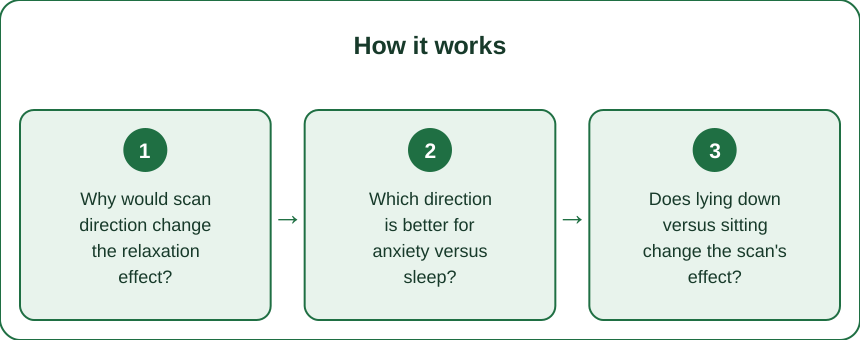
Why would scan direction change the relaxation effect?
Starting at the head and moving downward tends to engage more active, alert attention first, since the head and face carry a lot of tension and sensory awareness, which can feel grounding for a racing mind. Starting at the feet and moving upward tends to build a slower, more sedating wave of relaxation, which is part of why many sleep-focused body scans use this direction specifically.
Which direction is better for anxiety versus sleep?
For anxiety or overwhelm during the day, a top-down scan can feel more effective because it gives an active, racing mind something immediate and specific to focus on right away. For falling asleep, a bottom-up scan tends to work better since the gradual, slower buildup of relaxation mirrors the physical process of drifting toward sleep more naturally.
Does lying down versus sitting change the scan’s effect?
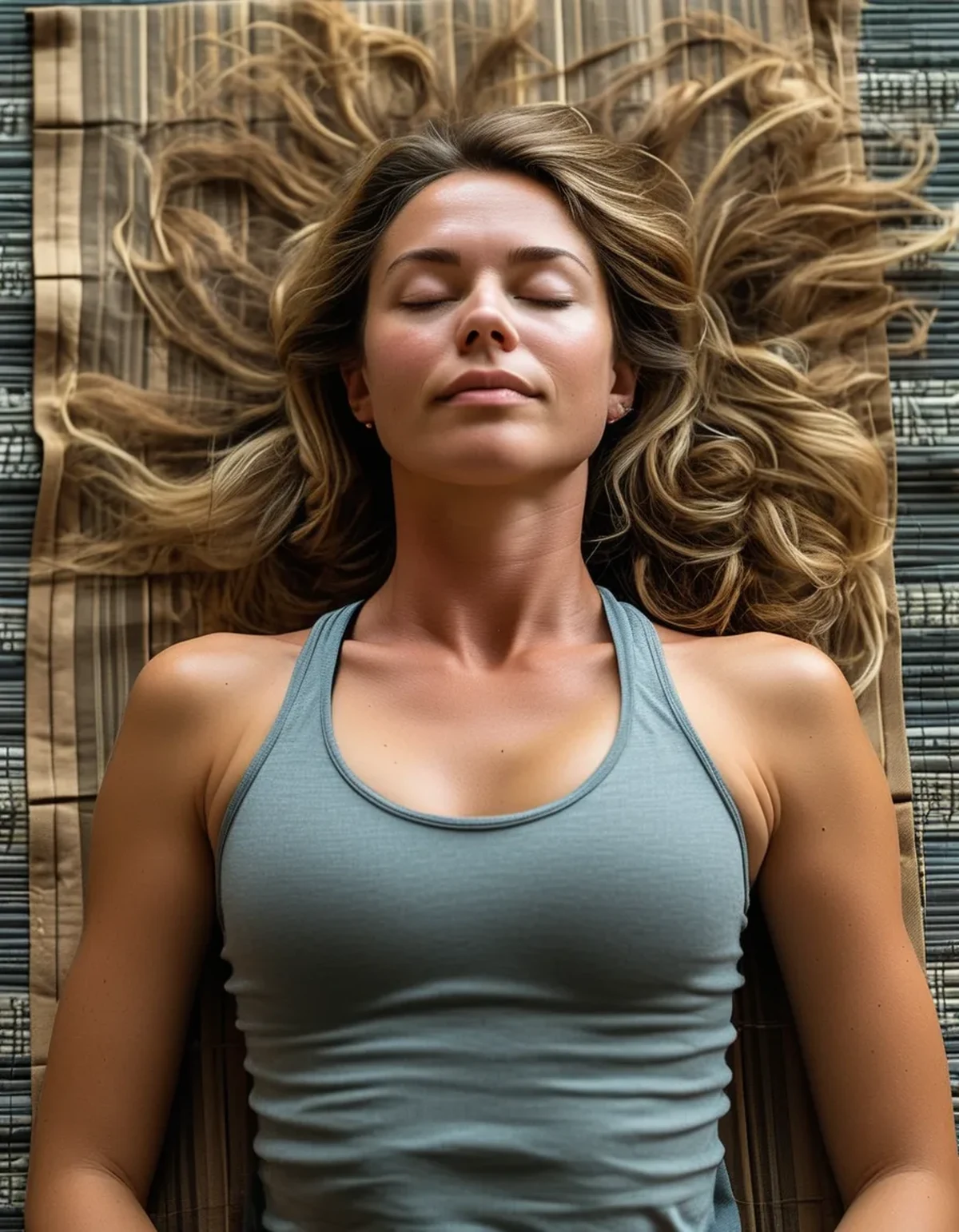
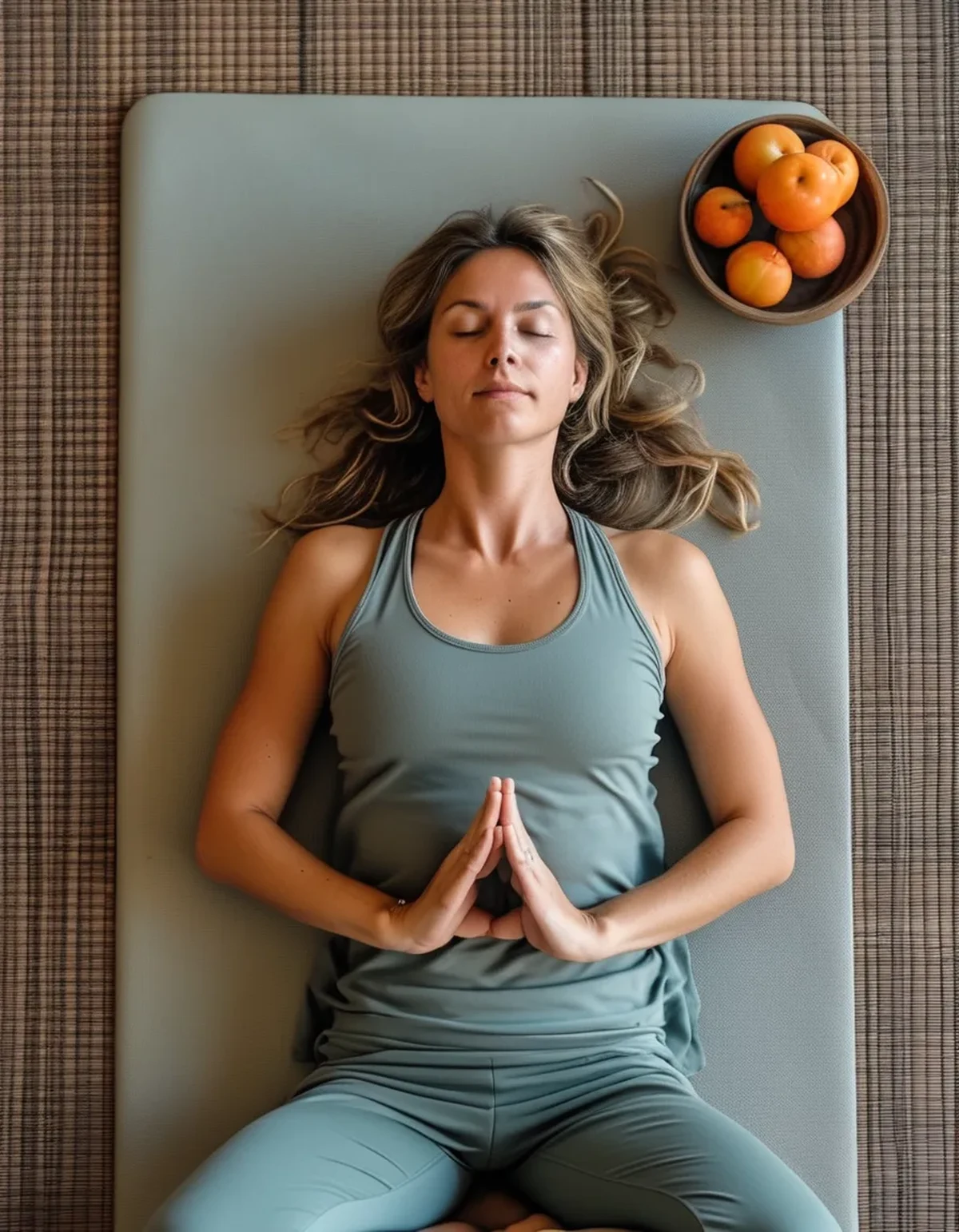
Yes — lying down allows full-body relaxation without needing to maintain any postural tension, which is ideal for sleep-focused practice, but it can also make some people drowsy or restless if the goal is calm alertness rather than sleep. Sitting upright preserves a bit more alertness, which suits body scans used as a midday reset rather than a bedtime practice.
Does scan speed matter as much as direction?
Yes, considerably — a rushed scan through the whole body in under 5 minutes rarely produces deep relaxation regardless of direction, while a slower scan spending 20-30 seconds per body area allows the nervous system more time to actually downshift. Direction sets the pattern, but pacing is what determines how deeply the relaxation lands.
Myth vs Fact: Any body scan works the same regardless of goal
Myth: a body scan is a body scan, so direction and pacing don’t matter much. Fact: the same technique used with different pacing and directions produces meaningfully different physiological effects, which is why matching the scan style to your actual goal (calm alertness versus sleep) improves results rather than just picking any guided recording at random.
FAQ: Body Scan Meditation Questions, Answered
Should beginners start with top-down or bottom-up scans?
Either works as a starting point, but trying both and noticing which feels more natural for your goal (daytime calm versus sleep) is more useful than picking one as universally correct.
How long should a body scan session last?
Anywhere from 5 to 20 minutes works, with longer sessions generally producing deeper relaxation, though even a short 5-minute scan has measurable calming benefits.
Can body scans help with physical tension, not just mental stress?
Yes, deliberately bringing attention to tense areas often triggers a natural, unconscious release of muscular tension that simply stretching alone doesn’t always achieve.
TL;DR:
- Top-down scans tend to feel more alerting and grounding
- Bottom-up scans tend to feel more sedating and sleep-friendly
- Match the direction to your actual goal, not just habit
- Slower pacing (20-30 seconds per area) deepens the effect regardless of direction
If your body scan isn’t landing the way you expect, try switching direction before assuming the technique doesn’t work for you.
Keep Reading
This article is for general informational purposes only and is not medical advice. Always consult a qualified health professional for guidance specific to you.