Somatic Exercises: The Nervous-System Workout Everyone Is Suddenly Talking About
Your feed has probably served you the phrase somatic exercises between sourdough and pilates — usually with a claim about releasing trauma from your hips. Strip away the mysticism and something genuinely useful remains: slow, attentive movement that helps a stressed nervous system downshift, unclenching muscles that tension has been quietly holding hostage. No sweat, no equipment, surprisingly powerful. Here is the sensible version.

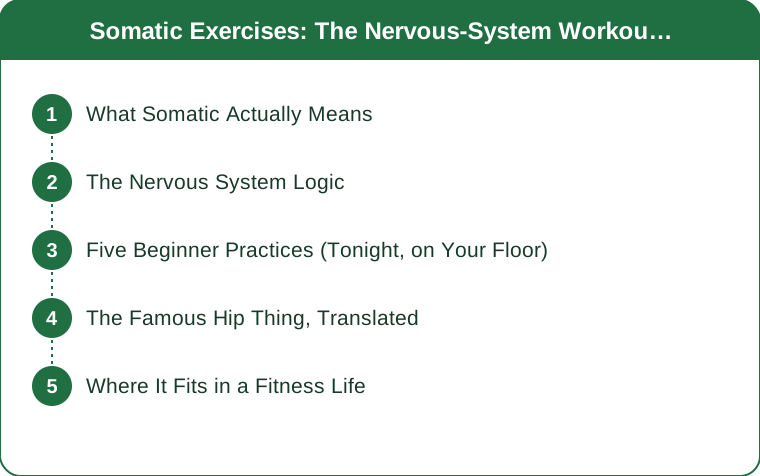
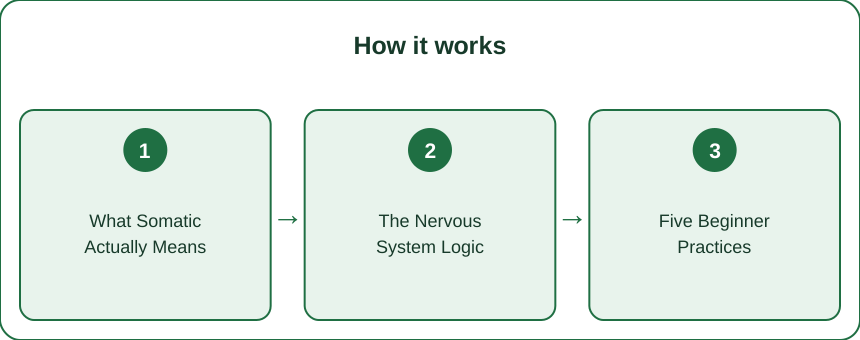
What Somatic Actually Means
Somatic simply means of the body. Somatic exercises are movements done slowly, with full attention on internal sensation rather than external performance — the opposite of counting reps while watching TV. The field draws from clinical traditions like Feldenkrais and Hanna Somatics, built on a real phenomenon: chronically stressed bodies hold low-grade muscle contraction (jaw, shoulders, hips, back) so constantly that the brain stops noticing. Slow felt movement is how it renotices.
The Nervous System Logic
Your autonomic nervous system runs a dial between fight-or-flight and rest-and-digest. Modern life leans hard on the first setting, and muscles obediently brace — for a threat that turns out to be email. Slow movement paired with slow exhalation is one of the few manual overrides you own: it signals safety upward from body to brain. Research on gentle-movement practices consistently shows reduced cortisol and anxiety markers. It is not magic. It is a wired-in feedback loop, finally used on purpose.

Five Beginner Practices (Tonight, on Your Floor)
One: body scanning — lie down, tour your body slowly from feet to jaw, just noticing. Two: the standing awareness sway — eyes closed, drift weight in slow circles, feel your feet negotiate. Three: shoulder rolls at one-tenth speed, tracking every degree. Four: cat-cow so slow it takes a full breath per direction. Five: the psoas release — lie with calves resting on a chair seat, breathe into your belly for three minutes. None of it looks like exercise. All of it is.
The Famous Hip Thing, Translated
About those emotions stored in your hips: the poetic version oversells, but the mechanical version holds. Hip flexors are prime bracing muscles — they tighten when you sit all day and when you are stressed, which for most of us is the same day. Slow hip-opening work releases real physical tension, and releasing long-held tension can genuinely feel emotional: sighs, softening, occasionally unexpected tears. You do not have to believe anything mystical to benefit. You just have to slow down and feel it.
Where It Fits in a Fitness Life
Somatic work is not a replacement for strength and cardio — it is the recovery layer most routines are missing. Slot it where stress lives: ten minutes before bed, after hard workouts, mid-workday between meetings, or as the whole workout on frazzled days when forcing intensity would just deepen the hole. Women juggling careers, caregiving and cortisol often report it becomes the practice they defend hardest. The body keeps the score; this is how you settle the account.
In a culture that measures workouts in sweat, somatic exercise makes a subversive offer: move less, feel more, and let your nervous system finally finish its exhale. Try the calves-on-chair psoas release tonight — three minutes, zero skill required. The trend will scroll on, as trends do. The skill of un-bracing your own body is yours to keep.
Keep Reading
This article is for general informational purposes only and is not medical advice. Always consult a qualified health professional for guidance specific to you.