What Time of Day Actually Works Best for a Somatic Practice?
Quick Answer: Morning somatic practice works best for setting a regulated baseline before the day’s stressors accumulate, while evening practice works best for actively discharging tension that built up during the day. If you can only pick one, evening tends to have a larger felt impact for most people, since it’s addressing tension that’s already present rather than tension that hasn’t happened yet.
Somatic practice advice rarely mentions timing, but when you do it changes what it’s actually accomplishing — prevention versus release are genuinely different jobs.

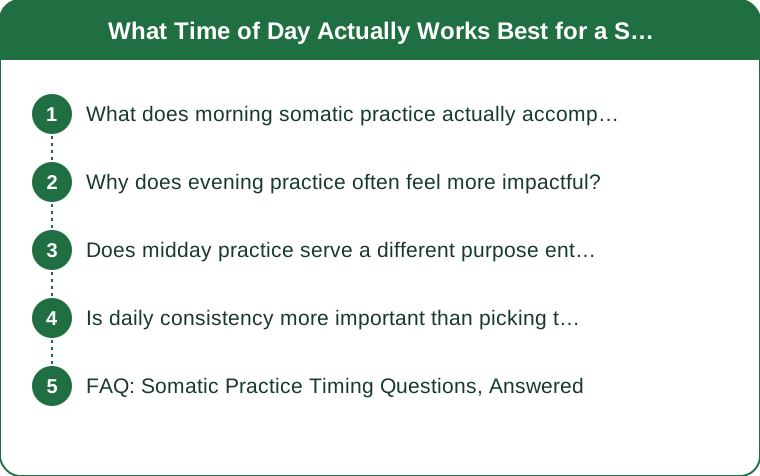
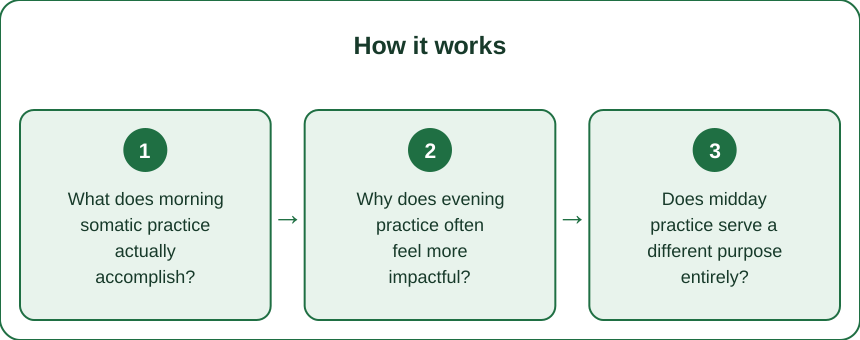
What does morning somatic practice actually accomplish?
A morning practice works on a relatively unloaded nervous system — before emails, commutes, or the day’s first stressor. This makes it well-suited to setting a baseline of regulation that you carry into the day, rather than processing anything specific.
The tradeoff: because there’s less accumulated tension to work with, morning sessions can feel less dramatically impactful in the moment than evening ones, even though the preventive value is real and shows up more as ‘the day went smoother’ than as an immediate felt shift.
Why does evening practice often feel more impactful?
By evening, the nervous system is carrying the accumulated activation of the day — deadlines, difficult conversations, physical tension from sitting or standing. A somatic practice at this point has actual material to discharge, which is why people often report a stronger, more noticeable shift in an evening session than a morning one.
This is also why evening somatic work is commonly recommended for sleep quality — discharging accumulated tension before bed reduces the amount of unprocessed activation that would otherwise interfere with falling asleep.

Does midday practice serve a different purpose entirely?
Yes — a short midday somatic reset (even 3-5 minutes) functions less as prevention or full discharge and more as a circuit breaker for whatever’s built up in the first half of the day, before it compounds through the afternoon. This is particularly useful on days with a stressful morning, where waiting until evening means carrying that activation for many additional hours.
Think of it as three different tools for three different jobs, not three versions of the same thing — which one matters most depends on your day’s actual stress pattern more than a fixed rule.
Is daily consistency more important than picking the ‘right’ time?
For building the underlying skill (interoceptive awareness, recognizing tension early), consistency matters more than timing — a shorter daily practice at a so-so time beats a longer, well-timed practice done inconsistently. The timing question mostly matters for maximizing the felt benefit of individual sessions, not for the longer-term skill-building.
A reasonable default for people newer to somatic work: anchor a daily practice to an existing routine (right after brushing teeth, right before turning off a bedside lamp) rather than optimizing timing before consistency is established.
FAQ: Somatic Practice Timing Questions, Answered
Can I do somatic practice right after a stressful event instead of waiting for a set time?
Yes, and it’s often especially effective — processing activation close to when it occurred, rather than waiting hours, can prevent it from compounding with the rest of the day’s stress.
Does practicing right before bed ever backfire and make it harder to sleep?
Occasionally, if the practice is more activating than calming (some shaking or intense release work can temporarily increase alertness) — if that happens, shift intense practices earlier and keep the pre-bed session gentle and slow.
How long should a daily somatic practice be?
Even 5-10 minutes done consistently produces real benefit — length matters less than regularity for most people building the underlying skill.
TL;DR:
- Morning practice sets a regulated baseline before the day’s stress accumulates
- Evening practice discharges what’s already built up and tends to feel more impactful
- A short midday reset works as a circuit breaker on unusually stressful days
- Consistency matters more than perfect timing for building the underlying skill
There’s no single correct time — match the session to what job you actually need it to do that day.
Keep Reading
This article is for general informational purposes only and is not medical advice. Always consult a qualified health professional for guidance specific to you.