Why the Body Trembles During Somatic Shaking Exercises, and Why That's the Point
Involuntary trembling that shows up during somatic shaking exercises can feel unsettling the first time it happens, especially if it continues after the deliberate shaking stops, but that spontaneous tremor is a well-documented nervous system release rather than a sign that something is wrong with the exercise or the body.

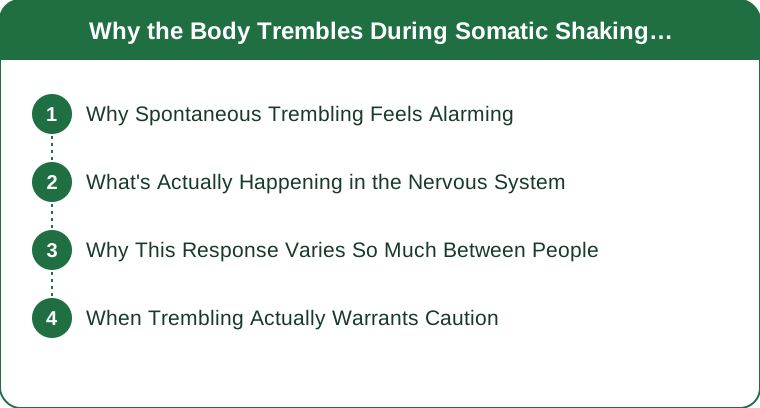
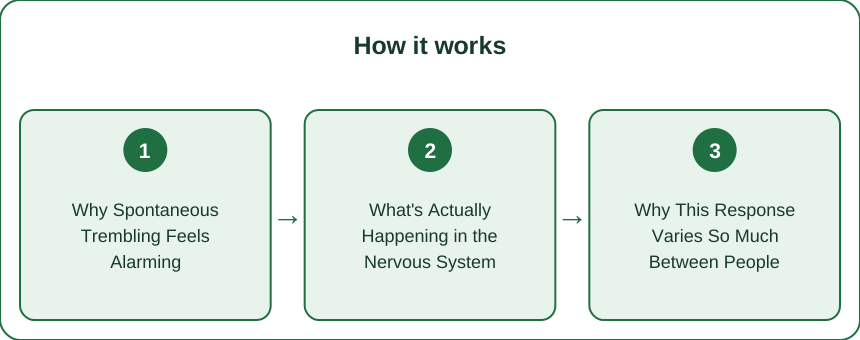
Why Spontaneous Trembling Feels Alarming
The reaction: trembling that continues involuntarily after a person stops deliberately shaking naturally reading as unusual or concerning, especially for anyone new to somatic practice who expects the movement to stop the moment they stop initiating it.
What’s Actually Happening in the Nervous System
The mechanism: somatic shaking practices being designed to help the nervous system discharge accumulated tension and stress held in the body, and involuntary tremor is one of the visible signs of that discharge process actually occurring, similar to how animals shake after a stressful event.

Why This Response Varies So Much Between People
The variation: how much spontaneous trembling shows up depending heavily on how much tension a person is holding and how used their nervous system is to this kind of release, meaning a strong tremor response on one day and almost none on another is both normal.
When Trembling Actually Warrants Caution
The distinction: trembling that comes with dizziness, chest pain, or a sense of panic being different from the settled, releasing quality of typical somatic tremor, and worth stopping the practice and checking in with a professional if it occurs, and the frame (involuntary trembling during somatic shaking is a normal nervous system release, not a malfunction — distress-linked trembling with dizziness or panic is what actually signals stopping and seeking guidance.)
Involuntary trembling that shows up during somatic shaking exercises can feel unsettling the first time it happens, especially if it continues after the deliberate shaking stops, but somatic shaking practices are designed to help the nervous system discharge accumulated tension and stress held in the body, and involuntary tremor is one of the visible signs of that discharge process actually occurring, similar to how animals shake after a stressful event. How much spontaneous trembling shows up depends heavily on how much tension a person is holding and how used their nervous system is to this kind of release, meaning a strong tremor response on one day and almost none on another is both normal. Trembling that comes with dizziness, chest pain, or a sense of panic is different from typical somatic tremor and is what actually signals stopping the practice and checking in with a professional.
Keep Reading
This article is for general informational purposes only and is not medical advice. Always consult a qualified health professional for guidance specific to you.