Why You Feel Tingling or Buzzing During Somatic Work (And When It's Normal)
Quick Answer: Tingling or buzzing during somatic work is usually a sign of nervous system activation releasing — increased blood flow and reduced muscular tension in an area that was previously guarded or numb. It’s typically harmless, but sharp pain, numbness that spreads, or dizziness are signals to stop and reassess.
You’re mid-session, settling into stillness, and suddenly your hands or chest start buzzing like static. Your first instinct might be alarm — but for most people, this sensation is actually the practice working, not a warning sign.

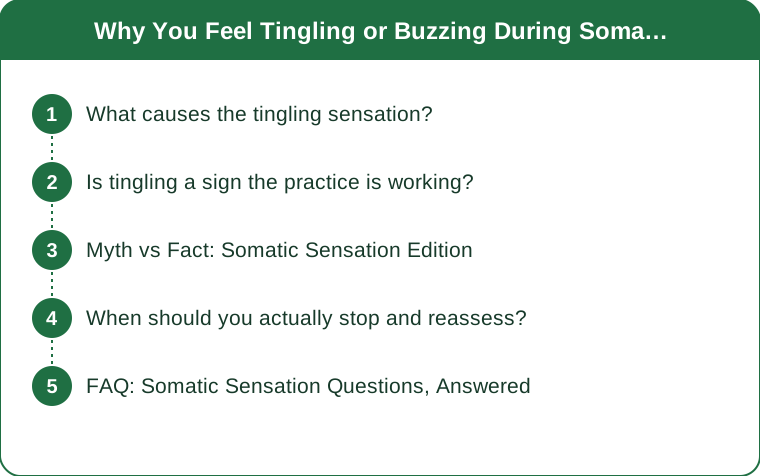
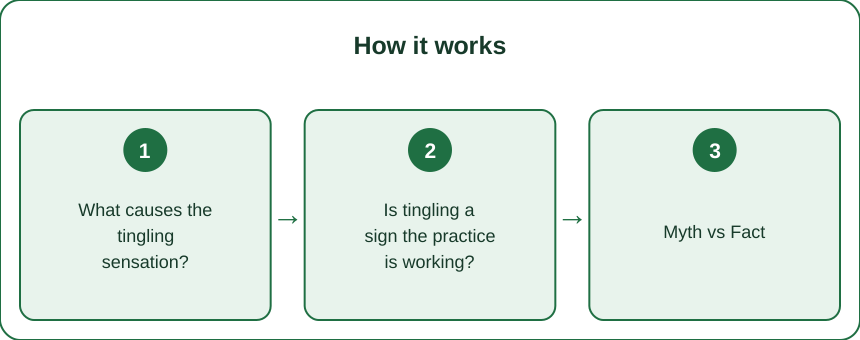
What causes the tingling sensation?
Somatic practices intentionally shift you out of chronic low-grade muscle guarding — tension patterns you’ve held so long you stopped noticing them. As that guarding releases, blood flow increases to the area and previously under-stimulated nerve endings reactivate, which reads as tingling, warmth, or buzzing.
This is similar to the pins-and-needles feeling when a limb ‘wakes up’ after being still — except here it’s tension waking up, not just circulation.
Is tingling a sign the practice is working?
For most people, yes — it’s commonly reported alongside genuine release, especially in areas people habitually clench (jaw, shoulders, hips, chest). It tends to fade within minutes as the nervous system settles into the new, less-guarded state.
That said, absence of tingling doesn’t mean the practice isn’t working either — plenty of people release tension with no dramatic sensation at all. It’s a possible sign, not a required one.

Myth vs Fact: Somatic Sensation Edition
Myth: Tingling means something is wrong or dangerous. Fact: In the context of intentional somatic practice, mild tingling or warmth is a commonly reported normal response, not a red flag.
Myth: More intense sensation means a deeper release. Fact: Intensity of sensation doesn’t reliably correlate with depth of nervous system change — subtle, calm sessions can be just as effective as intense ones.
Myth: You should push through any discomfort to get the full benefit. Fact: Somatic work is meant to stay within a tolerable range. Pushing through sharp pain works against the nervous-system-calming goal of the practice.
When should you actually stop and reassess?
Stop if you feel sharp or shooting pain, numbness that spreads or persists after the session ends, dizziness, or chest tightness with breathing difficulty. These aren’t typical release sensations and warrant checking with a healthcare provider.
If you have a diagnosed nerve condition, circulatory issue, or are pregnant, check with a professional before starting somatic practices that involve prolonged stillness or specific positions.
FAQ: Somatic Sensation Questions, Answered
How long does the tingling usually last?
Most commonly a few seconds to a few minutes during or right after the practice, tapering off as you return to normal movement. Tingling lasting hours afterward is less typical and worth noting.
Why do I only feel it in certain body parts?
Areas you habitually tense — often shoulders, jaw, or hips — tend to hold the most guarding, so they’re where release sensations show up most noticeably.
Can somatic practice cause harm if done incorrectly?
For most healthy adults, gentle somatic practices carry low risk. But it’s not a substitute for medical or mental health treatment for diagnosed conditions. This is general information, not medical advice.
TL;DR:
- Tingling/buzzing during somatic work usually means blood flow returning and chronic tension releasing
- It’s a commonly reported normal response, not required for the practice to be working
- Sensation intensity doesn’t equal depth of benefit — calm sessions count too
- Stop for sharp pain, spreading numbness, dizziness, or breathing difficulty
The buzz is usually your nervous system exhaling. Let it pass, and if something feels genuinely wrong rather than unfamiliar, trust that distinction and check with a professional.
Keep Reading
This article is for general informational purposes only and is not medical advice. Always consult a qualified health professional for guidance specific to you.