Why Does Your Body Shake During Somatic Release Work?
Quick Answer: Involuntary shaking during somatic release is a normal nervous system discharge response, similar to how animals shake off stress after a threat passes — it’s generally considered a sign the nervous system is releasing stored tension, not a cause for concern.
You’re lying still, breathing, and suddenly your legs start trembling on their own. It feels strange, maybe even a little alarming the first time. Here’s what’s actually happening.

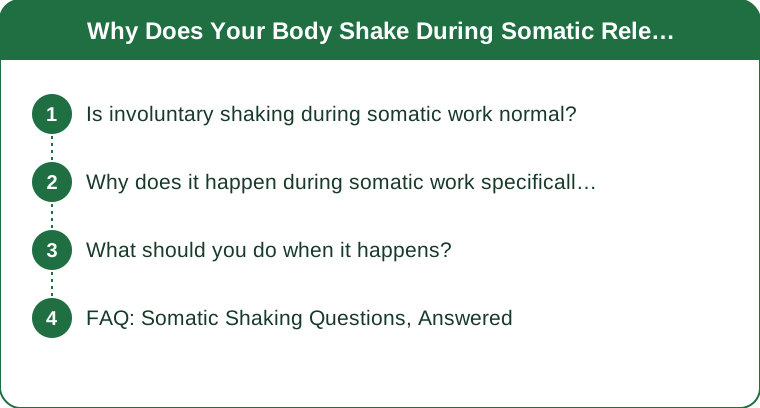
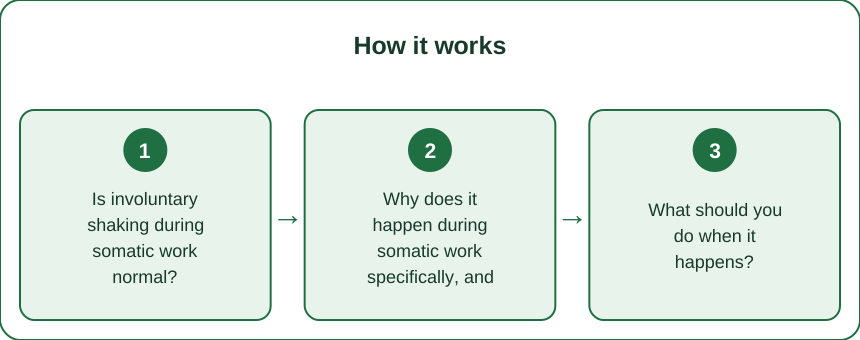
Is involuntary shaking during somatic work normal?
Yes, for most people — this is often referred to as neurogenic tremor, a natural mechanism through which the nervous system discharges stored activation from stress or tension. Many animals visibly shake after a stressful event as part of returning to a calm baseline state; humans have a similar mechanism, though it’s often suppressed by conscious control in daily life and only surfaces during deliberately relaxed, unguarded states like somatic practice.
The shaking isn’t something you’re causing deliberately, and trying to force or fake it doesn’t produce the same effect as letting it happen involuntarily when the body is ready.
Why does it happen during somatic work specifically, and not other times?
Somatic practices deliberately create a state of relaxed, unguarded attention where the usual conscious suppression of small involuntary movements relaxes — this is often when previously held tension has an opportunity to discharge through tremor. Regular daily activity keeps most people’s nervous system in a state where this kind of release doesn’t have room to occur.
This is why shaking often shows up specifically during slow, mindful movement or stillness practices rather than during vigorous exercise, which occupies the nervous system differently.

What should you do when it happens?
Generally, let it happen without forcing or suppressing it — most somatic practitioners recommend staying present with the sensation, continuing to breathe, and allowing the tremor to run its natural course, which is typically brief, lasting anywhere from several seconds to a few minutes. Trying to stop it or feeling like you need to control it can interrupt what’s considered a natural release process.
If it feels overwhelming or frightening rather than simply unusual, it’s completely fine to shift out of the practice, sit up, and ground yourself — comfort and safety take priority over completing a specific exercise.
FAQ: Somatic Shaking Questions, Answered
Is shaking during somatic work a sign of a specific trauma resurfacing?
Not necessarily — it can happen with general accumulated tension, not only significant trauma, and doesn’t require a specific memory or event to be present.
Should I feel emotional or cry when this happens?
Some people do, some don’t — both are considered normal, and there’s no expected emotional response required for the shaking to be a valid release.
When should shaking during somatic work be discussed with a professional?
If it happens outside of intentional practice, feels uncontrollable in daily life, or is accompanied by significant distress, it’s worth discussing with a trauma-informed therapist or somatic practitioner.
TL;DR:
- Involuntary shaking during somatic work is a normal nervous system discharge response
- It tends to surface during relaxed, unguarded states rather than daily activity
- Let it run its course rather than forcing or suppressing it
- Stop and ground yourself if it ever feels overwhelming rather than simply unusual
This is general information, not medical or therapeutic advice — work with a trauma-informed practitioner if you’re processing significant stress or trauma through somatic practice.
Keep Reading
This article is for general informational purposes only and is not medical advice. Always consult a qualified health professional for guidance specific to you.