Why Somatic Exercises Sometimes Trigger Sudden, Unexpected Emotion
Quick Answer: Sudden emotion during somatic work happens because the body stores stress and tension physically, and slowing down enough to notice bodily sensation can release that stored tension along with the emotion attached to it. It’s a normal, common response — not a sign something is wrong.
It can feel confusing or even alarming when a simple body scan or breathing exercise suddenly brings tears or a wave of feeling with no obvious trigger. This is a well-documented and genuinely common response, not something unusual happening to you specifically.

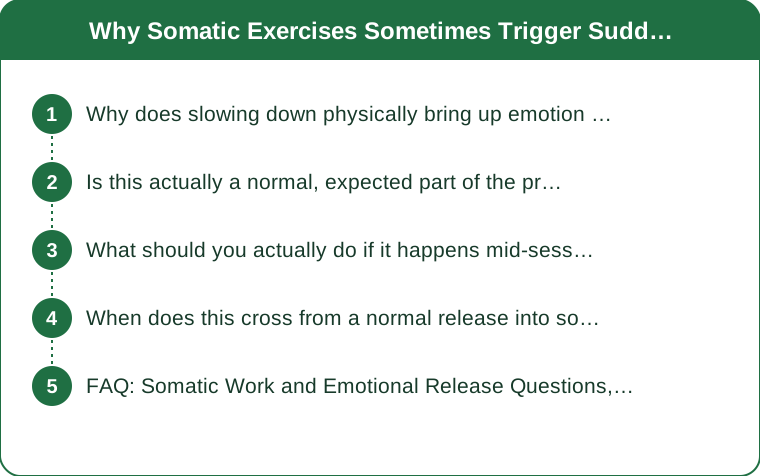
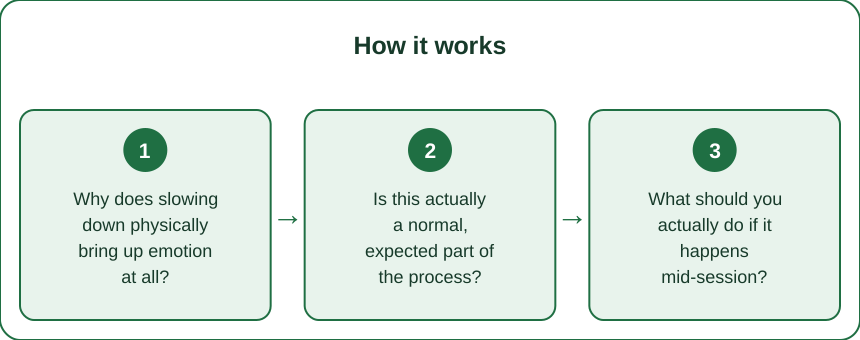
Why does slowing down physically bring up emotion at all?
Day-to-day life keeps most people in a state of low-grade physical tension and distraction that doesn’t leave much room for the nervous system to fully process stress in real time. Somatic work removes the usual distractions and asks you to actually notice sensation — and noticing often surfaces tension (and the emotion tied to it) that’s been sitting there, unprocessed, for a while.
This isn’t the exercise “causing” the emotion — it’s more that the emotion was already present at a low level, and slowing down is what makes it noticeable enough to surface.
Is this actually a normal, expected part of the process?
Yes, very commonly reported across breathwork, body scans, and other somatic practices. Practitioners often call this a “release” — a wave of emotion, sometimes tears, sometimes a shaking sensation, that passes through and then genuinely clears rather than lingering or worsening.
A release response is usually followed by a sense of lightness or calm afterward — this is one of the key differences from being emotionally overwhelmed in an unhelpful way, where the distress tends to persist rather than pass through and settle.

What should you actually do if it happens mid-session?
Let it happen without immediately trying to stop or analyze it. You don’t need to identify exactly what memory or stress triggered it in the moment — often there isn’t one specific, nameable cause, just accumulated tension finding a release point.
If it feels manageable, staying with the sensation (breathing through it, not fighting it) usually lets it pass within a few minutes. If it feels overwhelming rather than passing, it’s completely fine to stop the exercise, ground yourself (feet on the floor, naming things you can see), and return to it another time.
When does this cross from a normal release into something to bring to a professional?
If the emotional response is consistently overwhelming, doesn’t settle after the session ends, or brings up distressing memories you can’t process alone, that’s worth discussing with a therapist, ideally one familiar with somatic or trauma-informed approaches. A normal release tends to pass and leave you feeling lighter; a concerning pattern tends to linger or escalate. This is general information, not medical advice.
FAQ: Somatic Work and Emotional Release Questions, Answered
Does this happen every time, or just occasionally?
Occasionally for most people — many sessions pass without any strong emotional response; it tends to happen more during particularly stressful life periods.
Is crying during a body scan a sign it’s “working”?
Not a required sign — plenty of effective sessions involve no emotional release at all. It’s a normal possible response, not a marker of success or failure.
Should I do somatic work alone if I know I tend to have strong releases?
Many people prefer a guided class or practitioner setting for this reason — having support present makes an unexpected release feel more manageable, though solo practice is also fine for most people.
TL;DR:
- Sudden emotion during somatic work is a common, well-documented release response, not a malfunction
- It happens because slowing down surfaces tension the body has been holding without you noticing
- Let it pass without forcing analysis — it typically clears within a few minutes and leaves you feeling lighter
- Overwhelming or lingering distress, rather than passing release, is worth bringing to a trauma-informed professional
An unexpected wave of emotion during somatic practice is one of the more misunderstood normal responses — and understanding it usually makes it feel far less alarming next time.
Keep Reading
This article is for general informational purposes only and is not medical advice. Always consult a qualified health professional for guidance specific to you.